



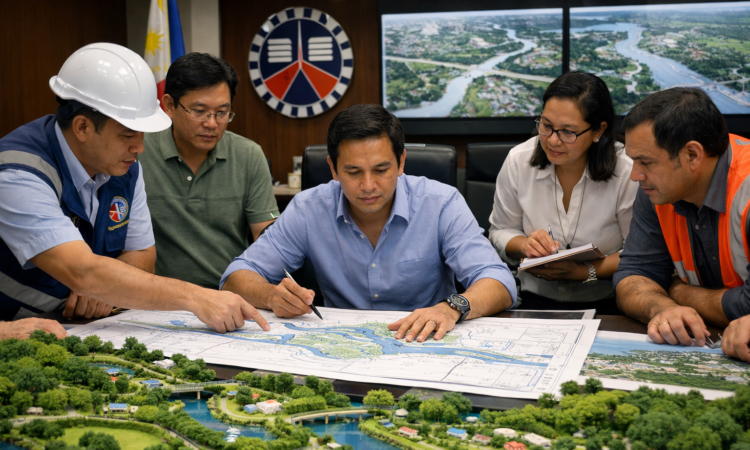
In a bid to enhance flood management in the Philippines, Vince Dizon, a prominent figure in infrastructure development, is exploring innovative hybrid flood control projects. On September 23, 2026, during a meeting at the Department of Public Works and Highways (DPWH) Central Office in Manila, Dizon emphasized the importance of integrating both concrete and nature-based components to better manage floods in vulnerable areas.
Dizon, known for his proactive approach to infrastructure, highlighted the need to adopt strategies from countries that have successfully implemented similar projects. He remarked, “I think we need to take a broader look at how things are being done elsewhere. Let’s look at countries that have already successfully implemented this.” His statement underscores the importance of learning from international best practices to address the Philippines’ perennial flood problems.
Historically, flood control efforts have heavily relied on concrete structures, such as dikes and levees, to manage water flow and prevent inundation. However, Dizon noted that some countries are beginning to dismantle these concrete structures in favor of solutions that incorporate natural elements. “They’ve already gone through the process…as was mentioned earlier, they used to rely heavily on concrete — it was all concrete. But in some cases, they are actually tearing down those concrete structures. They are shifting toward more nature-based solutions,” he explained.
This shift towards nature-based solutions represents a growing recognition of the benefits these methods offer. Such approaches often include the restoration of wetlands, reforestation, and the creation of green spaces that can naturally absorb excess water. These techniques not only help in flood management but also contribute to biodiversity and ecosystem health.
Despite the potential of nature-based solutions, Dizon acknowledged that they are not a panacea. “Not everything can be nature-based, though. There are instances where concrete is truly necessary,” he admitted. This pragmatic view suggests that a balanced approach, which utilizes both traditional engineering methods and ecological solutions, may offer the most effective strategy for flood control.
The Philippines, an archipelago frequently battered by typhoons and heavy rains, faces significant challenges in managing flood risks. The exploration of hybrid projects could signal a new era in flood management, aiming for sustainability and resilience. The strategy could potentially reduce the impact of floods on communities and infrastructure, which often results in significant economic losses and humanitarian crises.
Dizon’s initiative comes at a crucial time as climate change exacerbates weather patterns, leading to more severe and unpredictable flooding events. By considering a mix of concrete and natural interventions, the Philippines could be better equipped to handle these challenges, protecting both its urban and rural landscapes.
As discussions around these hybrid projects continue, stakeholders from various sectors, including engineers, environmentalists, and local communities, will likely play a crucial role in shaping and implementing these strategies. The integration of diverse perspectives and expertise will be essential to create effective and sustainable flood control solutions that align with the unique geographical and climatic conditions of the Philippines.
For more information, visit the original source at Sunstar.