



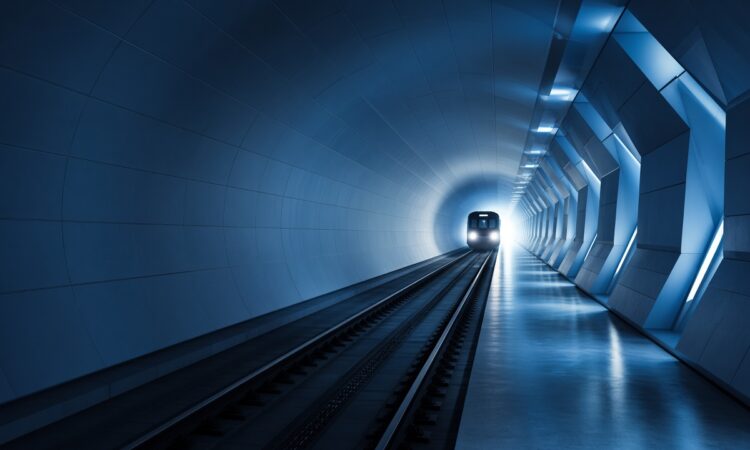
The Metro Manila Subway Project reached a major construction milestone on September 23, 2026, when a tunnel boring machine broke through the southbound passage linking the North Avenue and Quezon Avenue stations. President Ferdinand R. Marcos Jr. inspected the Quezon Avenue Station with Acting Transportation Secretary Banoy Lopez.
The Department of Transportation said the breakthrough was inspected about 35 meters below ground. Officials described the moment as another step toward completing the country’s first underground railway system and expanding mass transit options for Metro Manila commuters who rely on faster rail links.
Contract Package 102 covers a 3.1-kilometer tunnel railway and the underground Quezon Avenue and East Avenue stations. The package, awarded to the joint venture of Nishimatsu Construction Company Limited and D.M. Consunji Inc., has a total contract amount of about PHP25.538 billion.
CP102 includes tunnel links from North Avenue to Quezon Avenue and from Quezon Avenue to East Avenue. Separate reporting from the presidential inspection noted that tunnel boring works for the Quezon Avenue–East Avenue section have already been completed, underscoring steady progress inside the contract package.
President Marcos welcomed the advance, saying residents will benefit once the subway and existing rail lines offer more ways to move through the city. He remarked that the project is gradually taking shape and that people living near the corridor will be fortunate to have both subway and MRT options.
The full Metro Manila Subway is planned as a 33-kilometer line with 17 stations from Valenzuela City to Ninoy Aquino International Airport Terminal 3. It is financed by the Japan International Cooperation Agency with Philippine government counterpart funding supporting the long-term rail investment.
Once fully operational, travel time from Valenzuela to NAIA Terminal 3 is expected to fall to around 41 minutes from about one hour and 30 minutes. Planners project roughly 519,000 daily passengers in the opening year, with design capacity of more than one million passengers without additional train sets.
Completion of the subway is targeted for the fourth quarter of 2031. Related coverage cited overall project progress of around 60 percent, while Marcos also led groundbreaking on September 16 for the NAIA station under Contract Package 109 in Pasay City.
Acting Secretary Lopez tied the breakthrough to a broader rail strategy, saying mass public transportation — especially railways — remains a core answer to heavy traffic when the subway operates alongside lines such as MRT-7, the North-South Commuter Railway, MRT-3, and LRT Lines 1 and 2.
For daily commuters, the Quezon Avenue breakthrough is a visible sign that underground civil works are advancing station by station. As more tunnel segments and stations come online toward the 2031 target, Metro Manila moves closer to a faster, high-capacity link from the north of the capital to the airport.
Source: Philippine News Agency (https://www.pna.gov.ph/index.php/articles/1284700) ; Philippine News Agency (https://www.pna.gov.ph/articles/1284639) ; Philstar (https://www.philstar.com/nation/2026/09/24/2558565/marcos-inspects-metro-manila-subway-project)