




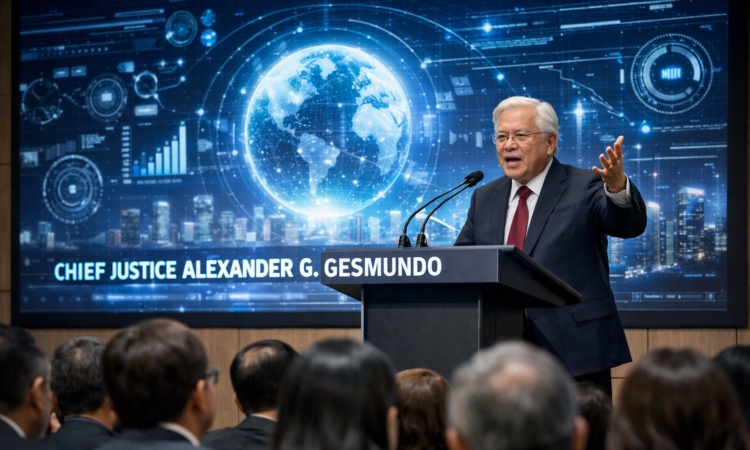
Supreme Court Chief Justice Alexander G. Gesmundo delivered a compelling keynote address on 18 September 2026, at the Inter-Pacific Bar Association (IPBA) Arbitration Day 2026. Gathering at the University of the Philippines – Bonifacio Global City Campus in Taguig City, legal professionals and scholars examined the intersection of technology and justice in the evolving field of international arbitration.
Chief Justice Gesmundo’s speech highlighted the transformative role technology plays in arbitration processes while underscoring the unchanging objective of achieving justice. “International arbitration is evolving because the world in which it operates is changing,” he remarked, emphasizing the dynamic nature of the legal landscape. The integration of technological advancements into arbitration proceedings offers significant potential to enhance efficiency and accessibility. However, Chief Justice Gesmundo was careful to frame technology as a tool rather than an end in itself. “Technology may assist the process, but the responsibility for the process remains human…Technology is a means; justice remains the end,” he asserted, stressing that the ultimate goal should always be to deliver fair and just outcomes.
The address at UP BGC comes at a time when arbitration, as a preferred method of dispute resolution, is witnessing rapid changes prompted by technological innovations. The Chief Justice emphasized the need for the legal community to adapt to these changes while maintaining a steadfast commitment to core ethical and legal principles. “We cannot predict precisely what the next decade of international arbitration will bring,” he noted. “But we can determine the principles by which we respond to them, and we can prepare the next generation not simply to inherit the institutions we have built, but to improve them responsibly.”
During the event, participants engaged in discussions about how artificial intelligence, digital communication, and other technological tools can be leveraged to streamline arbitration processes. These innovations promise to reduce costs and delays, making arbitration a more accessible option for global businesses seeking efficient resolution to cross-border disputes. Yet, with these benefits come challenges, including concerns about data privacy, cybersecurity, and the need for practitioners to keep pace with technological advancements.
Chief Justice Gesmundo’s address resonated with the audience, many of whom are grappling with how best to integrate technology into their practice without sacrificing the integrity and fairness of the arbitration process. His remarks called for a balanced approach that embraces innovation while safeguarding justice. By fostering a forward-thinking mindset, the legal community can ensure that arbitration remains relevant and effective in a rapidly changing world.
The IPBA Arbitration Day 2026 served as a platform for legal professionals to exchange ideas and strategies for navigating the challenges and opportunities presented by technology. As the legal field continues to evolve, events like these provide crucial opportunities for dialogue and collaboration, helping to shape the future of international arbitration in a way that prioritizes justice above all else.
For more information, visit the original source: Daily Tribune.