



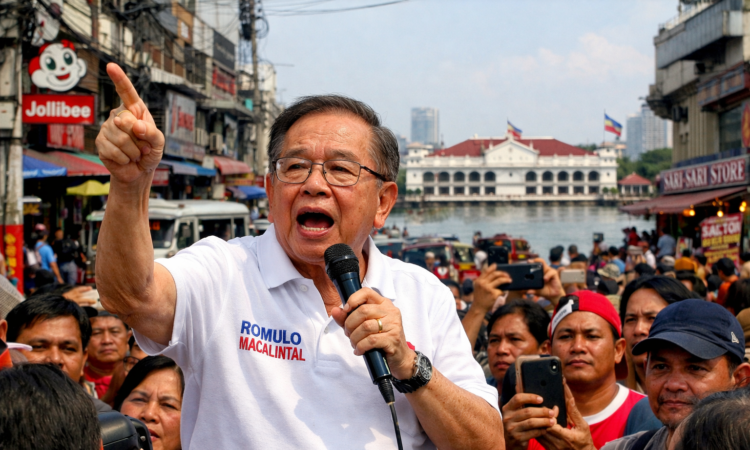
In a recent development, seasoned election lawyer Romulo Macalintal has voiced his optimism that President Ferdinand Marcos Jr. will veto the proposed bill to postpone the Barangay and Sangguniang Kabataan Elections (BSKE). Speaking on September 23, 2026, in Manila, Macalintal articulated his belief that the bill should be rejected to avoid pushing back the scheduled elections.
Macalintal underscores the significance of maintaining the electoral calendar, arguing that postponing the elections could undermine democratic processes at the community level. His confidence in a potential presidential veto stems from the feedback received from the Office of the Appointments Secretary, which indicated that his request for a meeting with the President is under careful consideration.
“Clearly, it indicates that the bill is under deep study by the President and opens a genuine possibility for a veto,” Macalintal stated. He further explained that the acknowledgment from the Office of the Appointments Secretary suggests an openness to evaluating his concerns. “Otherwise, the Office of the Appointments Secretary would not even say that my request is under evaluation and I will be updated soon,” he added.
Macalintal, who has a robust history in electoral law, is keen on presenting his arguments directly to President Marcos and his legal advisers. “I look forward to meeting the President and his legal advisers to personally present my arguments and objections to the enrolled bill,” he remarked.
The proposed postponement of the BSKE has stirred significant debate among lawmakers, stakeholders, and the general public. Proponents of the bill argue that delaying the elections could allow for more comprehensive preparations and adjustments in light of recent administrative changes. However, opponents like Macalintal caution that such postponements could erode trust in the electoral process and disenfranchise voters at the grassroots level.
President Marcos Jr. has yet to make a public statement regarding his stance on the bill. However, his administration’s response to Macalintal’s request for discussion suggests that the decision is still pending a thorough review. The President’s eventual decision will be closely watched, as it will set a precedent for how electoral schedules are handled in the future, particularly in the context of local governance and youth representation.
The outcome of this decision holds considerable weight, not only for the politicians and citizens involved but also for the broader democratic framework of the Philippines. The Barangay and Sangguniang Kabataan Elections are pivotal in shaping community leadership and ensuring that the voices of young Filipinos are heard and represented in the political arena.
As the nation awaits the President’s decision, both supporters and critics of the bill continue to advocate for their respective positions. The discourse surrounding this issue reflects the vibrant, albeit challenging, nature of Philippine democracy, where diverse perspectives must be reconciled to achieve a consensus that serves the best interests of the public.
Original source: Sunstar
add a comment