



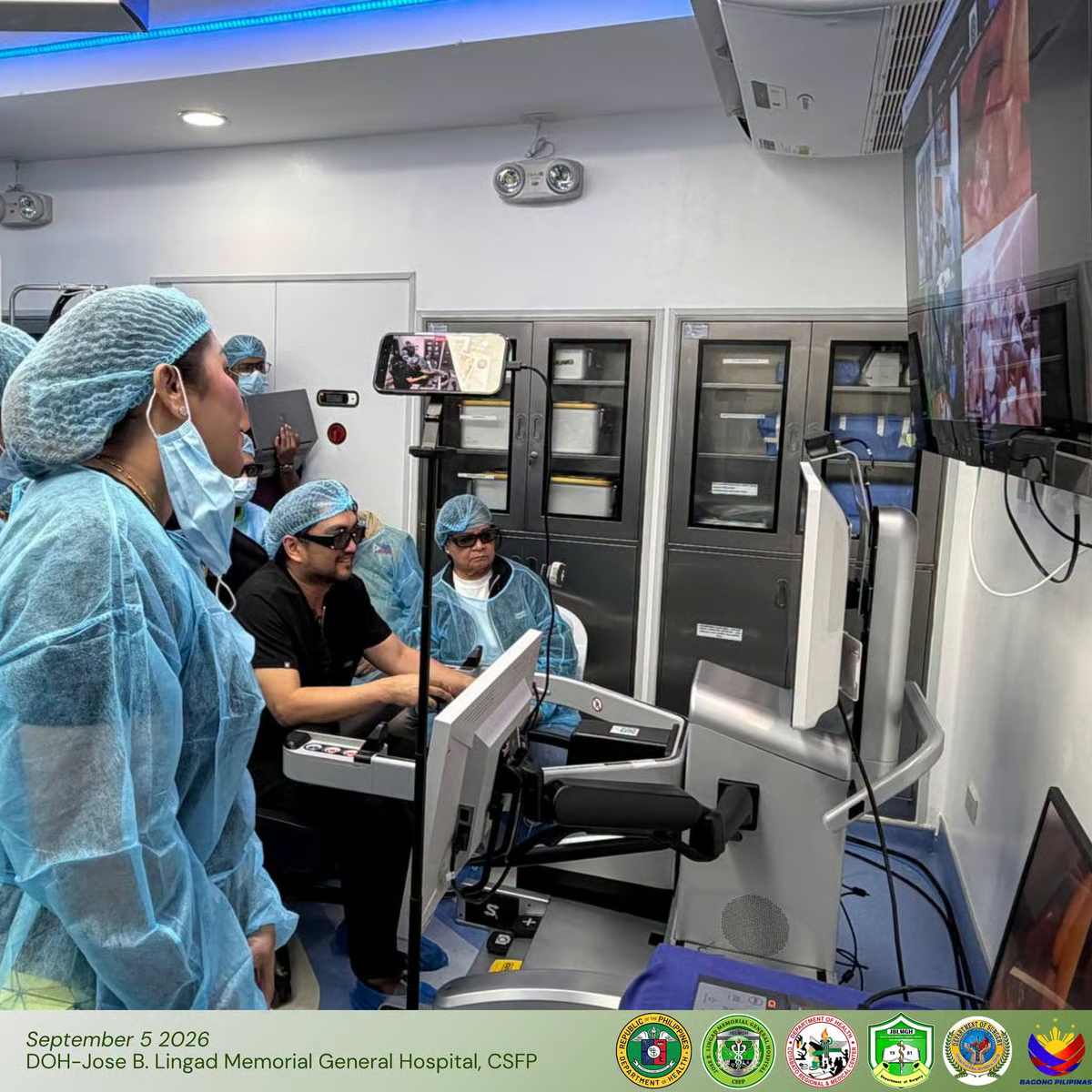
In a groundbreaking medical achievement, the Philippines has successfully conducted its first long-distance, cross-regional telesurgery. This historic event took place on September 9, 2026, involving medical teams from the Jose B. Lingad Memorial General Hospital (JBLMGH) in San Fernando, Pampanga, and the Cotabato Regional and Medical Center (CRMC) in Cotabato City. The endeavor marks a significant advancement in the country’s healthcare capabilities, particularly in delivering specialized surgical services to remote areas.
The surgery was carried out with the help of robotic technology, allowing Dr. Ryan Quiambao, stationed at JBLMGH, to remotely perform a complex surgical procedure on a patient located at CRMC. The operation was a collaborative effort involving several key figures, including Dr. Al-Jazzer Angas, Dr. Louis Gerard Agustin, and Health Secretary Edwin Mercado, who were instrumental in overseeing the process. Pampanga Governor Lilia Pineda and Nanay party-list Representative Florabel Yatco also supported the initiative, highlighting the government’s commitment to improving healthcare accessibility.
Dr. Quiambao expressed his enthusiasm for the successful execution of the procedure, attributing it to the seamless coordination among the administrative, clinical, and technical experts from both hospitals. “This cross-regional triumph was made possible by the dedicated coordination of administrative, clinical, and technical experts from JBLMGH and CRMC,” he noted, emphasizing the collaborative spirit that fueled this medical milestone.
The initiative was spearheaded by JBLMGH Medical Center Chief Dr. Monserrat Chichioco and CRMC Medical Center Chief Dr. Ishmael Dimaren, with the backing of Dr. Sudhir Shrivastava, an expert in robotic surgery. Their leadership ensured that the teams were well-prepared and equipped to handle the complexities of the telesurgery, which required precise synchronization and communication between the two medical facilities.
The telesurgery was not merely a demonstration of advanced medical technology but also a strategic move to address the disparities in healthcare access across the Philippines. By leveraging robotic telesurgery, patients in remote regions can now benefit from specialized surgical services that were once only available in major urban centers. This development is expected to alleviate the burden on central hospitals and provide timely medical interventions to those in need, regardless of their geographic location.
DOH Central Luzon Director Dr. Corazon Flores underscored the importance of this achievement for the future of healthcare in the country. She highlighted that the success of this telesurgery sets a precedent for future medical procedures and innovations aimed at enhancing healthcare delivery nationwide.
The successful execution of this long-distance telesurgery is a testament to the Philippines’ commitment to integrating technology into healthcare, ensuring that advancements are not confined within the walls of urban hospitals. As the nation continues to embrace digital health solutions, the expectation is that more Filipinos will gain access to quality healthcare services, ultimately improving the overall health and well-being of communities across the archipelago.